
ENIGMA

People
Simone Anna Maria Lemmers
Elettra Synchrotron. Project PI
BIO SIMONE
Simone Lemmers is a Biological Anthropologist specializing in dental and bone histology, investigating questions related to life history, growth, development, and responses to physiological stress.
She completed her PhD at Durham University, UK, focusing on stress, life history, and dental development in primates. During her previous postdoctoral work in Cyprus, she actively engaged in non-destructive approaches to analysing archaeological human remains, utilizing Synchrotron Radiation for research in pathology, stress, and health in past populations. As the ENIGMA PI, her current work centres on employing advanced X-ray techniques to study Neanderthal ontogeny and environmental adaptations through virtual cortical bone histology, aiming to gain insights into the evolution of the human life history trajectory. Lemmers combines her research in evolutionary anthropology with collaborative efforts at the Massachusetts General Hospital and Harvard Medical School, where she focuses on dental histology of deciduous teeth as non-invasive biomarkers to assess the impact of early-life adversity on mental health. Her research integrates evolutionary adaptations and the ability of hard tissues to capture growth parameters and stress exposure, contributing to a comprehensive understanding of human life history evolution and modern human variation.
Diego Dreossi
Elettra Synchrotron. Main project Supervisor
BIO DIEGO
Dr. Diego Dreossi is a physicist and expert in instrumentation and X-ray imaging techniques. He was an associate member of INFN and participated in experiments at CERN and FERMILAB, testing Position Sensitive Photomultipliers and developing beam hodoscopes and contributing to the development of detectors. During 1997-98, he received a SIEMENS fellowship for CT imaging quality optimization and new detectors. He later joined the DIRAC collaboration at CERN and became a member of the SFD group. From 1999 to 2001, he worked on implementing new X-ray imaging modalities for cartilage and cancellous bone studies at the Trieste University. From 2000 to 2006 he was a research assistant in physics at the University of Trieste in the frame of SYRMEP (Synchrotron Radiation for Medical Physics) collaboration working as a project coordinator of clinical experimentation on phase contrast mammography with synchrotron radiation. In that period he became the technical manager of the SYRMEP beamline at Elettra. Dr. Dreossi has been a scientist at Elettra since 2006, managing industrial commissions for X-ray microCT construction and contributing to the design of the imaging laboratory at MLAB (ICTP, Trieste). Besides his research activity, during the past years he has been the project manager for several industrial commissions to construct X-ray microCT. He was involved in the design and construction of the imaging laboratory at the MLAB (ICTP, Trieste) and the BioMERA project at the Cyprus Institute, Nicosia
lUCIA MANCINI
SLOVENIAN NATIONAL BUILDING AND CIVIL ENGINEERING INSTITUTE (ZAG), CO-SUPERVISOR AND SCIENTIFIC COLLABORATOR
BIO LUCIA
Lucia Mancini is a material science physicist who has been working in the field of imaging characterization techniques since 1992. She has worked for more than 25 years as beamline scientist in synchrotron radiation facilities also leading a custom-built laboratory for microfocus X-ray computed tomography (CT). Since May 2022 she has been working as senior researcher in the Materials Dept. of the Slovenian National Building and Civil Engineering Institute in Ljubljana (Slovenia). Her research activity deals with: hard 2D and 3D X-ray imaging of solid and liquid materials, application to the morphological and textural characterization of geo- and innovative materials as well as natural and cultural heritage studies, in situ and real-time CT experiments under high-temperature, mechanical testing, operando conditions. The investigation methods are mainly absorption and phase-contrast X-ray and neutron imaging often combined with X-ray and neutron diffraction and scattering-based techniques. She has a strong background in 3D/4D data processing and analysis.
Alessia Nava
ROME SAPIENZA UNIVERSITY
Scientific Collaborator
BIO ALESSIA
Alessia Nava is a biological anthropologist specialized in dental histology, with particular attention to the early phases of human life. During her career, she explored several dimensions of palaeoanthropological research, from Archaeology and Palaeoanthropology to cutting-edge technologies applied to archaeological and fossil human specimens. In the last few years, she developed histologically-defined elemental and isotopic analyses of dental enamel through LA-(MC)-ICPMS, aiming at disentangling at the high spatial resolution the mineralization patterns of human dental enamel and the dietary and mobility patterns of past human populations. From the start of her PhD in 2014, she developed techniques for virtual histology of fossil and subfossil teeth at the SYRMEP beamline of Elettra Sincrotrone in Trieste (Italy). She is the P.I. of the ERC funded research project MOTHERS hosted by Rome Sapienza University
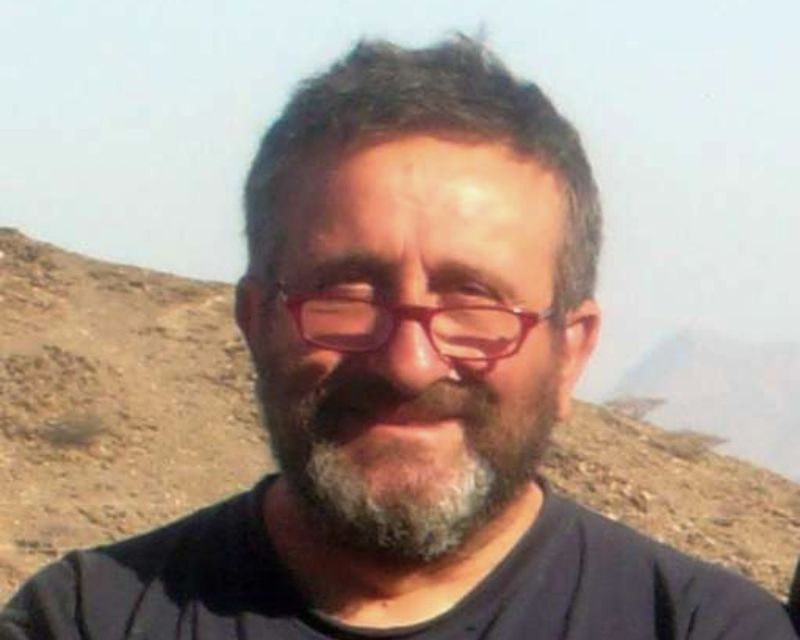
LUCA BONDIOLI
University of Padua. Scientific Collaborator
BIO LUCA
Luca Bondioli is a physical anthropologist and paleoanthropologist, currently an Adjunct Professor of Bioarchaeology and Prehistory at the University of Padua (Italy). He directed the Service of Bioarchaeology at the Museo delle Civiltà (Rome, Italy) between 1986 and 2020. His main interests are advanced methods in skeletal biology, image analysis, digital radiography, microtomographic (µCT) measurements with both conventional X-ray and synchrotron light sources, dental histology, high spatial resolution biogeochemistry, and the application of statistical and mathematical methods in Archaeology and Anthropology. He has authored over 150 articles in Italian and international journals and has carried out field missions to Iran, Pakistan, Turkmenistan, Oman, the United Arab Emirates, Kenya, Ethiopia, and Eritrea.
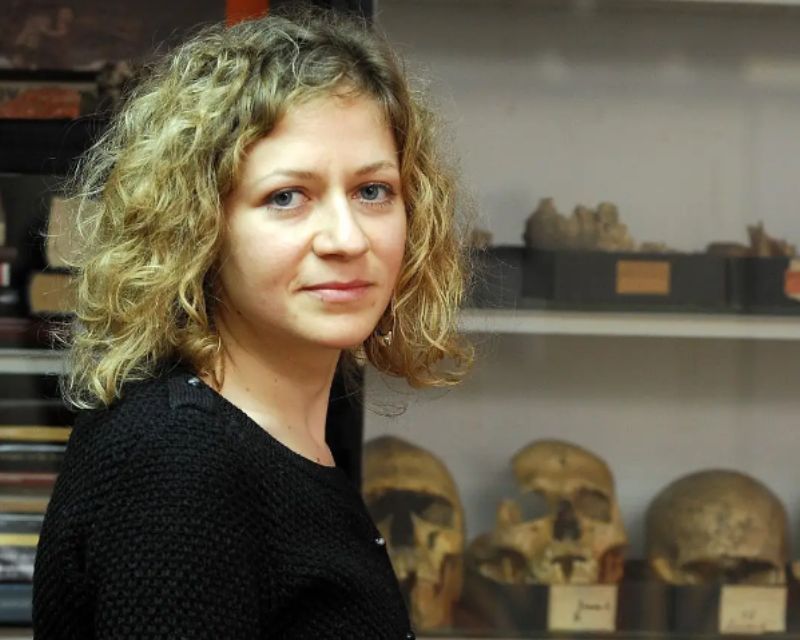
Davorka Radovcic
Croatian Natural History Museum Scientific Collaborator
BIO DAVORKA
Davorka Radovčić is the curator of the Krapina Neandertal Collection at the Croatian Natural History Museum. Her research focuses on Neandertals, Homo naledi and modern humans. She held an Honorary Research Fellow position at the University of the Witwatersrand, Johannesburg, South Africa. Dr. Radovčić earned her Bachelor’s degree in Archaeology from the University of Zagreb, Croatia, and her Master’s and PhD degrees in Anthropology from the University of Michigan, United States. She specializes in paleoanthropology, museum studies, and cultural heritage.
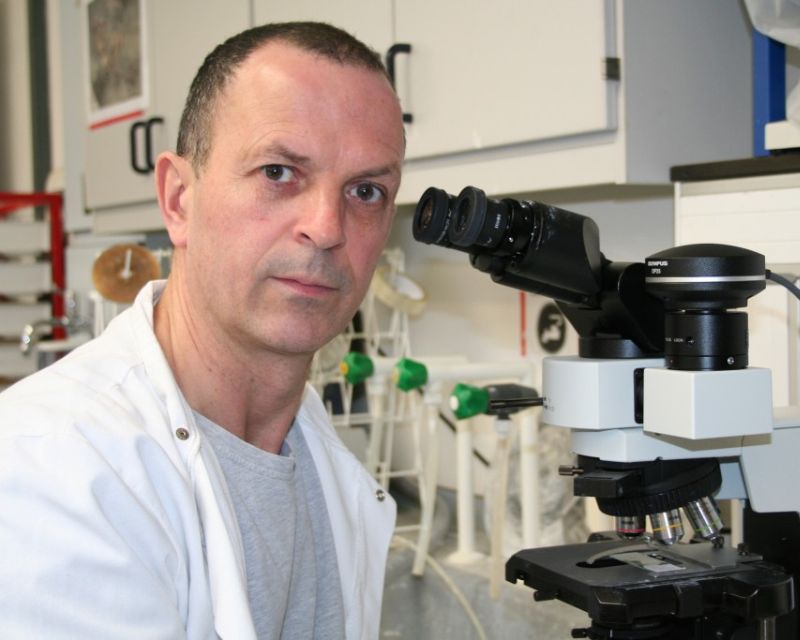
Patrick Mahoney
University of Kent – Secondment supervisor and Scientific Collaborator
BIO PATRICK
Dr Patrick Mahoney is a human skeletal biologist who specialises in reconstructing the cell mechanisms underlying the morphology of hard tissues, especially deciduous teeth and long bones. This allows him to address questions related to growth and development, bioarchaeology and human evolution. Dr Mahoney was awarded a first class BSc degree in Archaeology from University College London in 1999, and a distinction for an MSc in Human Osteology and Palaeopathology from the University of Sheffield in 2000. With Research Council funding, he gained a PhD from the University of Sheffield in 2004. Before joining the School of Anthropology and Conservation at Kent in 2008 as a Lecturer in Biological Anthropology, Patrick was employed as a postdoctoral researcher on AHRC and NSF-funded projects researching dental development in humans and fossil primates.
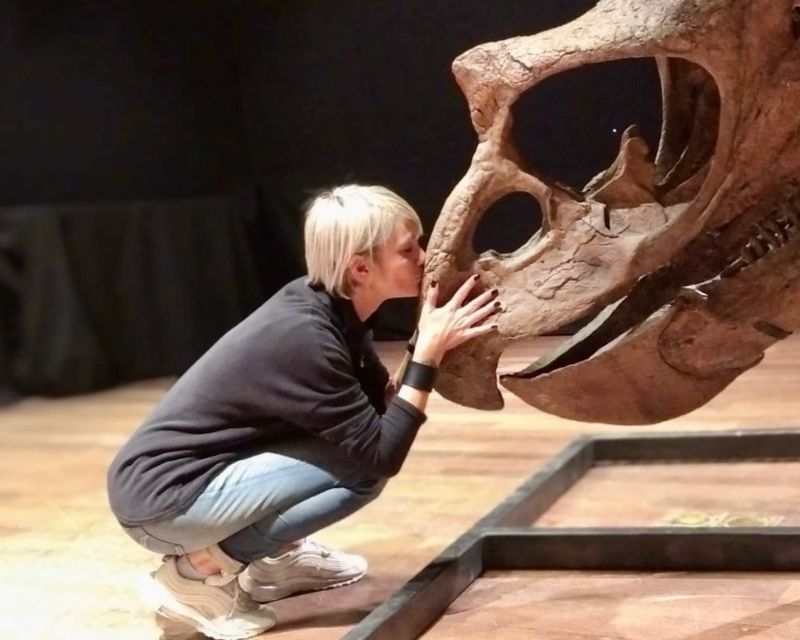
Giorgia Bacchia
ZOIC, Supervisor for the
Non-academic placement
ZOIC INFO
Zoic, recognized as one of the most dynamic European companies in the field of paleontology and Earth Sciences, operates as a Paleotech company, specializing in the professional preparation of fossil specimens, replicas, and tri-dimensional models. Their primary activity involves supplying these artifacts, along with scientific information, to museums, researchers, and private collectors worldwide, showcasing the entire process from fossil excavation to display in prominent museum halls. Zoic’s Paleontological Laboratory serves as both a workplace and a public didactic center, utilizing state-of-the-art multimedia communication techniques. Constant technical updates in the laboratory aim to verify new materials and develop innovative technologies. The company collaborates with the Italian Ministry of Culture, participating in excavations of the unique Italian dinosaur locality near the Villaggio del Pescatore in the vicinity of Trieste, and contributes to the challenging chemical preparation of findings. Zoic’s significant role in prospecting and researching fossil vertebrates and invertebrates has positioned them as the top company in the region for science communication in paleontology.


