
On Thursday, March 27th, I had the pleasure of being an invited speaker at a thematic event organized by the Rijksdienst voor het Cultureel Erfgoed (Dutch Cultural Heritage Agency), which focused on cremated remains as a rich source of archaeological information.
Cremation remains may be fragile and fragmented, but they hold a wealth of data—from burial practices to demographic patterns—spanning from prehistory through to the early medieval period. The event brought together a wonderfully diverse group of speakers to explore current methods, challenges, and new insights in the study of cremated human material.
Due to some unexpected travel issues, I had to get a bit creative with my contribution. Fittingly, for a talk on Virtual Bone Histology, I had to present in “virtual mode.” Fortunately, the organizers were incredibly accommodating. A big thank you to Dr Liesbeth Theunissen, Michiel Meurs, and Dana Kooistra for running such a smooth event and finding ways to make even the interactive parts work remotely!
A special shout-out to Liesbeth, who even managed to include me in the “Open Space” session—an informal setup where attendees could engage speakers in one-on-one discussions. She simply carried me around on her laptop, allowing me to virtually join in and have some fantastic, in-depth conversations with colleagues and participants. We discussed everything from lab-based versus synchrotron-based analysis, to the accessibility of archaeological material, and trends in the Dutch osteological record.
It was also a great (virtual) reunion with several former colleagues and friends from my Leiden days, including Dr Arjan Louwen, Dr Barbara Veselka, Dr Tristan Krap, and Joris Brattinga, all of whom continue to do exciting and important work.
If you’re curious about the event—and feel like brushing up on your Dutch—the livestream is still available to view!
https://channel.royalcast.com/cultureelerfgoed/#!/cultureelerfgoed/20250327_1
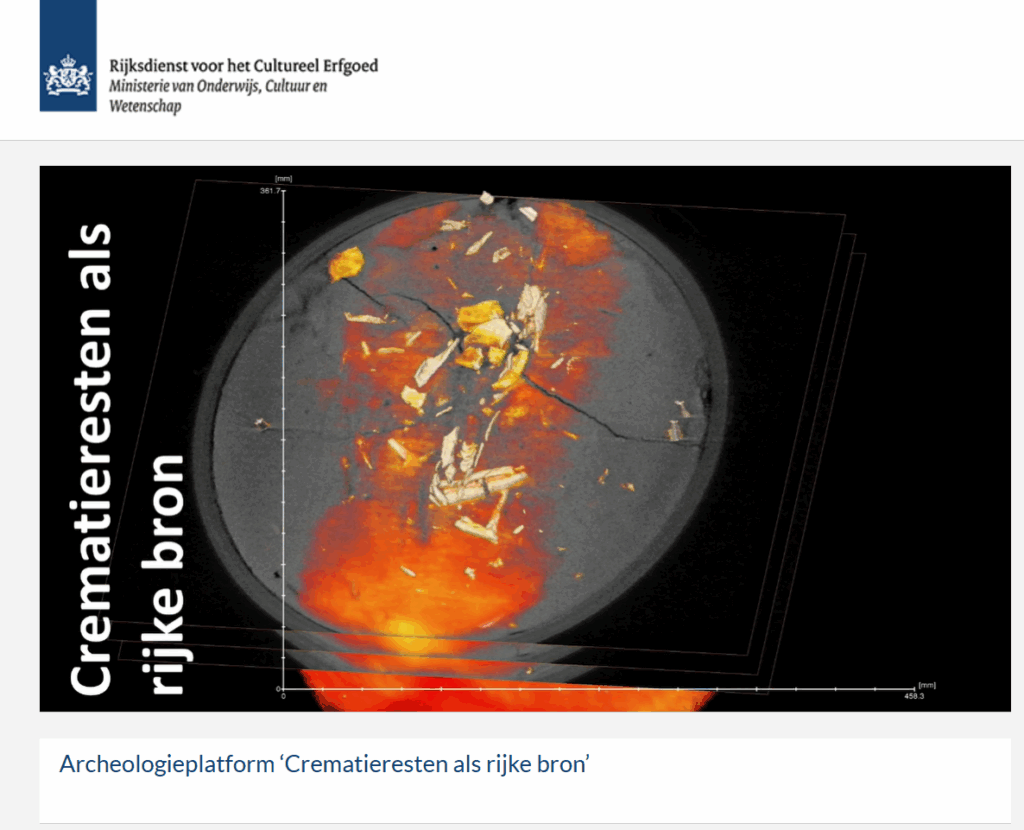
Advertisement Image of the event: ‘cremated remains as a rich source of archaeological information’
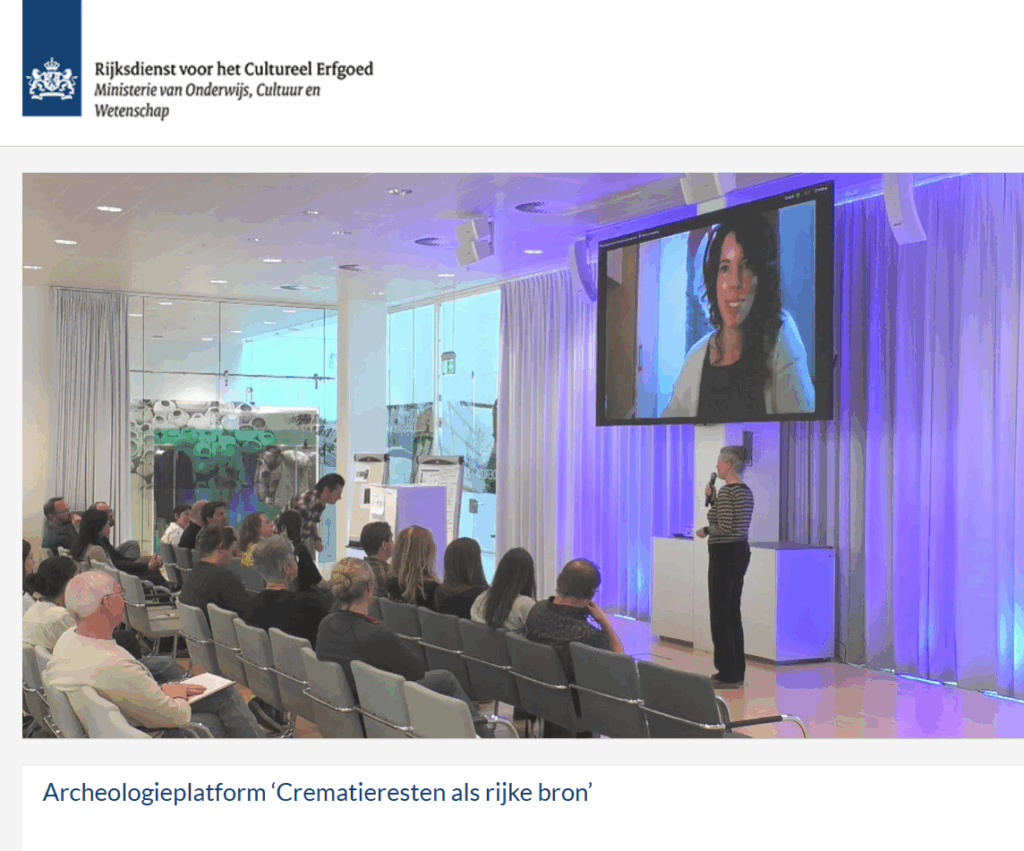
A screenshot from the live-stream, where Dr Lemmers is being introduced to the Dutch Audience: a mixture of archaeological professionals, students, and the wider public.
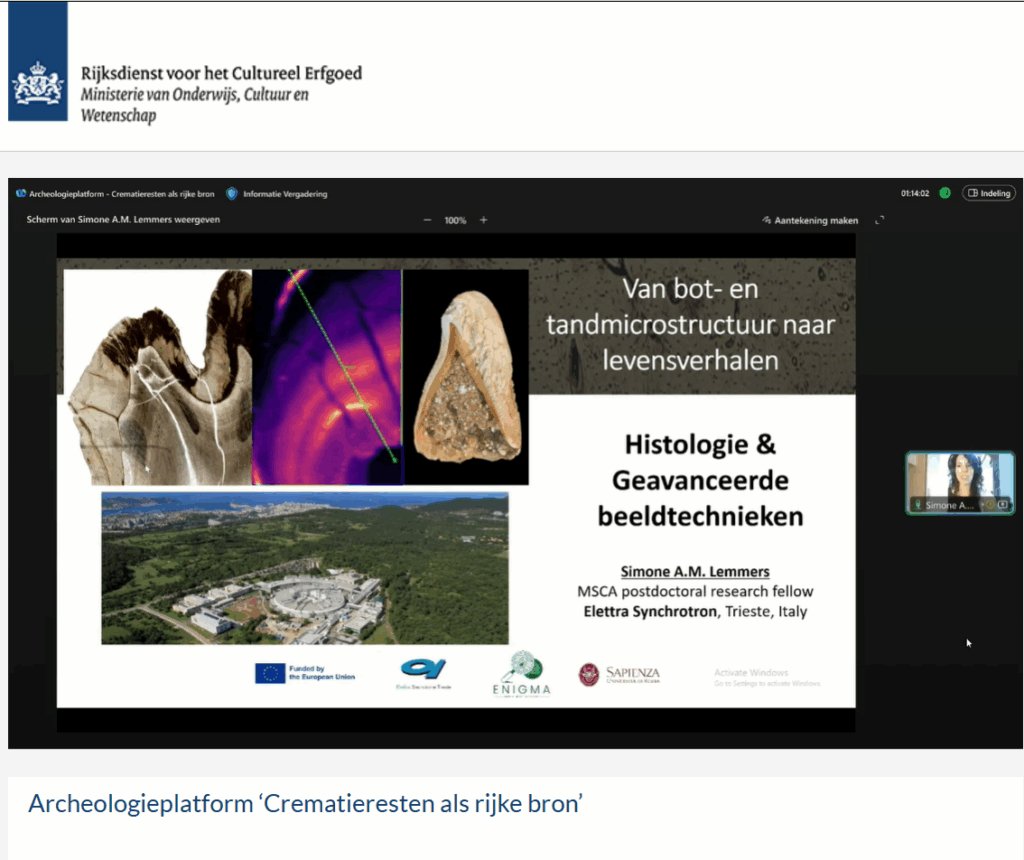
The title of the talk was, as translated from Dutch: From bone and dental microstructure to life stories: Histology and advanced imaging techniques’
And for sake of completeness, an overview of the full programme:
| Tijd | Onderdeel |
| 09.30 | Inloop aan het Smallepad 5, Amersfoort |
| 09.50 | Digitale inloop |
| 10.00 | Welkom en inleiding door Michiel Meurs (BAAC) en moderator Dana Kooistra |
| 10.15 | Als een lopend vuurtje. De geschiedenis van crematierestenonderzoek in Nederland en het belang van cremeren in de metaaltijden Arjan Louwen, Universiteit Leiden |
| 10.45 | Uitgecremeerd? De omgang met de dood in de vroege middeleeuwen Femke Lippok, Koninklijk Instituut voor het Kunstpatrimonium (Brussel) |
| 11.15 | De crematie van het Binnenhof Den Haag Mignonne Lenoir, gemeente Den Haag |
| Van bot- en tandmicrostructuur naar levensverhalen: histologie en geavanceerde beeldtechnieken Simone Lemmers, onderzoeker bij Elettra Sincrotrone (Triëst) | |
| Een beslisboom voor het schatten van de verbrandingstemperatuur van crematieresten en selecteren van fragmenten voor vervolgonderzoek Tristan Krap, Universiteit van Maastricht | |
| 11.40 | Open Space ronde |
| 12.25 | Plenaire terugkoppeling |
| 12.40 | Lunch op eigen gelegenheid (Bedrijfsrestaurant is geopend) |
| 13.30 | Start middagprogramma |
| 13.35 | Hak of verpak! Dwingen nieuwe methoden en technieken ons om de documentatie van prehistorische crematiegraven te herzien? Casestudy: Tilburg-Udenhoutseweg Joris Brattinga, Archol |
| 14.05 | Vurige feiten: recente ontwikkelingen op het gebied van crematierestenonderzoek Barbara Veselka, Vrije Universiteit Brussel |
| 14.35 | Van as tot analyse: isotopenonderzoek op crematieresten Lisette Kootker, Vrije Universiteit Amsterdam |
| Kleine urn minutieus onderzocht. Casestudy: Bergeijk Liesbeth Theunissen, Rijksdienst voor het Cultureel Erfgoed | |
| 15.00 | Open Space ronde |
| 15.40 | Plenaire terugkoppeling |
| 15.55 | Samenvatting en terugblik |
| 16.20 | Afsluiting |